Our Mission
We are dedicated to improving dialysis care by promoting the use of ultrasound-guided needle placement to reduce complications and improve patient outcomes worldwide.
What We Do
We work to improve dialysis care by advocating for ultrasound-guided needle placement. Through education, research, and outreach, we aim to reduce preventable complications like infiltration, infection, and vessel damage. Our goal is to make safer, more precise dialysis access available to all patients.
-
Dialysis is a life-saving treatment that filters waste and fluid from the blood when the kidneys can no longer do so. It requires inserting large needles into a special blood vessel, called a fistula or graft, several times a week. When done without guidance, needle placement can cause serious complications. Ultrasound helps by showing a real-time image of the vessel, allowing for safer, more accurate needle insertion.
-
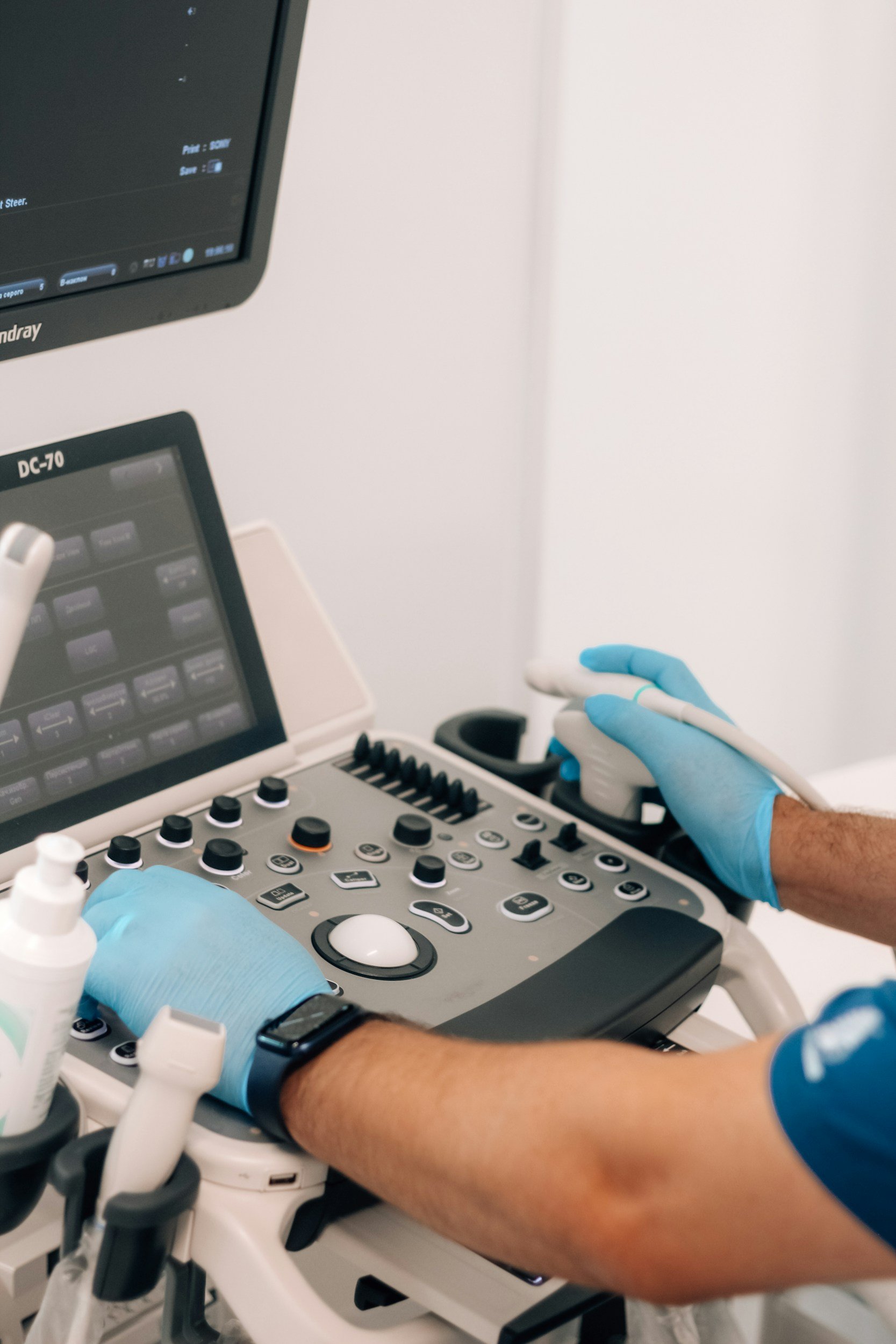
Ultrasound is a non-invasive imaging technique that uses high-frequency sound waves to produce real-time visualizations of internal structures in the body. While it's widely recognized for monitoring fetal development during pregnancy, it also plays a critical role in guiding medical procedures and evaluating blood flow. In dialysis, ultrasound helps visualize fistulas and grafts with precision, reducing complications like hematomas, infiltration, and vessel trauma to make treatment safer and more effective.
-
Incorrect needle placement can lead to serious complications such as infiltration, hematomas, infections, or even damage to the access site, which may require surgical repair. Repeated needle trauma can also lead to aneurysm formation, scarring, or clotting, which may prevent future dialysis sessions and reduce the lifespan of the access site. Accurate needle placement is critical to avoid these complications and ensure treatment is both safe and effective.
-
Ultrasound provides real-time images of blood vessels beneath the skin, allowing nurses and technicians to guide dialysis needles with greater accuracy. By showing the location, depth, and condition of the fistula or graft, it helps prevent missed insertions and reduces the risk of complications like infiltration, hematomas, vessel damage, and infection. This added precision makes dialysis safer, more effective, and more comfortable—especially for patients with difficult or complex access sites.
Contact us
Interested in learning more? Contact us here.